2026 Guide: 9 Best UX Research and AI Course Options
TL;DR
AI is already embedded in UX research workflows, with 56% of research professionals using it (up from 20% in 2023). The best UX research and AI course for you depends on whether you need a certificate, a practical analysis workflow, or applied AI product design support. For dedicated researchers, UXR Institute offers the strongest focused value at $295. For teams shipping AI products, applied practitioner paths that teach trust layers and agentic UX patterns will serve you better than any generic certificate.
AI Is Changing Research, but Not Replacing Judgment
The shift happened faster than most expected. According to User Interviews’ 2024 State of User Research report, 56% of UX and research professionals now use AI in their research process, nearly triple the 20% reported in 2023. Among those who use AI across research phases, 90% apply it during analysis and synthesis, the most cognitively demanding part of the work.
The numbers tell a clear story. AI in UX research is not a future trend. It is the current default for most teams.
But speed is only half the picture. The same User Interviews report found that 29% of respondents cited lack of nuance and context as a drawback, 27% flagged inaccuracy, and 16% pointed to the review burden that AI outputs create. AI can compress low-level research operations, but the time saved is only useful if researchers maintain a review loop that catches shallow summaries, false themes, hallucinated connections, and privacy mistakes.
That tension is exactly why choosing the right UX research and AI course matters. A course that teaches prompts without methodology produces faster bad research. A course that teaches judgment alongside tools produces faster good research.
This guide compares nine options across pricing, research depth, format, and honest tradeoffs to help you pick the right one for your role and budget.
At-a-Glance Comparison Table
| Option | Starting Price | Format / Duration | Best For | Research Depth | Biggest Limitation |
|---|---|---|---|---|---|
| Thiago Patriota Library + Applied AI/Agentic UX | Discovery call; newsletter free tier | Applied library + consultancy | AI product teams needing research-informed agentic UX | Applied/team-specific | Not a formal certificate course |
| UXR Institute AI for UX Research | $295 | Live online, 3 weeks | UX researchers needing AI-assisted qualitative analysis | High | Smaller brand; limited public reviews |
| UX Design Institute Certificate in AI for User Research | €750 | Live online, 7.5 hours over 3 weeks | UX/product professionals wanting a formal certificate | Medium-high | Short duration; requires research familiarity |
| General Assembly UX Research & Strategy with AI | $2,950 | Part-time online course | Employer-funded learners wanting broad structure | Medium-high | Expensive; state eligibility restrictions |
| User Interviews AI for User Research 101 | Free | Free course, 2 weeks | Budget learners starting with AI in UXR | Medium | Lighter than paid cohort programs |
| Coursera / IBM Generative AI for UI/UX Design | $59/mo (Coursera Plus) | Self-paced, 8 weeks | Beginners wanting broad AI + UI/UX certificate | Medium-low for UXR | Not research-specific |
| Designlab AI for UX Design | $799 | 4 weeks, async + live | Experienced product/UX designers | Medium | More design workflow than UXR-specific |
| Uxcel Enhancing UX Workflow with AI | Free limited; Pro $15/mo yearly | Self-paced, ~3 hours | Budget self-paced learners | Low-medium | Short; limited depth |
| IxDF AI / Human-Centered AI Library | $22/mo billed annually | Membership library | Long-term UX learners needing theory | Medium | Annual subscription model |
How We Evaluated These Courses
Not every AI course for UX research deserves a recommendation. We used four criteria to separate useful training from hype.
Research rigor. Does the course teach qualitative methods, research planning, coding, synthesis, and evidence standards, or does it skip straight to AI prompts?
AI fluency. Does it explain what large language models can and cannot do? Does it teach context engineering, output validation, and the limits of AI-generated analysis?
Implementation artifacts. Does the learner leave with reusable workflows, templates, analysis matrices, stakeholder decks, or governance checklists?
Limits and liability. Does the course cover privacy, confidential data, bias, synthetic users, hallucinations, and human review protocols?
We also weighted pricing transparency, independent user sentiment (including practitioner discussions on Reddit and review platforms), format flexibility, and role fit. A course that scores high on rigor but ignores privacy is incomplete. A course that teaches tools without methodology ages within months.
Practitioners on Reddit consistently reinforce this standard. In a popular thread about AI and UX courses, a top comment advises choosing courses that “teach how to think with AI in a UX context, not just tool demos,” and warns that tools evolve faster than course content.
Quick Recommendations
Before the full breakdown, here are the fastest paths based on what you actually need:
- Best applied path for AI product teams: Thiago Patriota Library + applied AI/agentic UX practice
- Best formal UX research-specific course: UXR Institute
- Best formal certificate: UX Design Institute
- Best free starting point: User Interviews
- Best broader bootcamp-style option: General Assembly
- Best budget self-paced option: Uxcel
- Best broad marketplace certificate: Coursera/IBM
- Best for experienced designers: Designlab
- Best long-term UX library: Interaction Design Foundation
Now the details.
1. Thiago Patriota Library + Applied AI/Agentic UX Practice
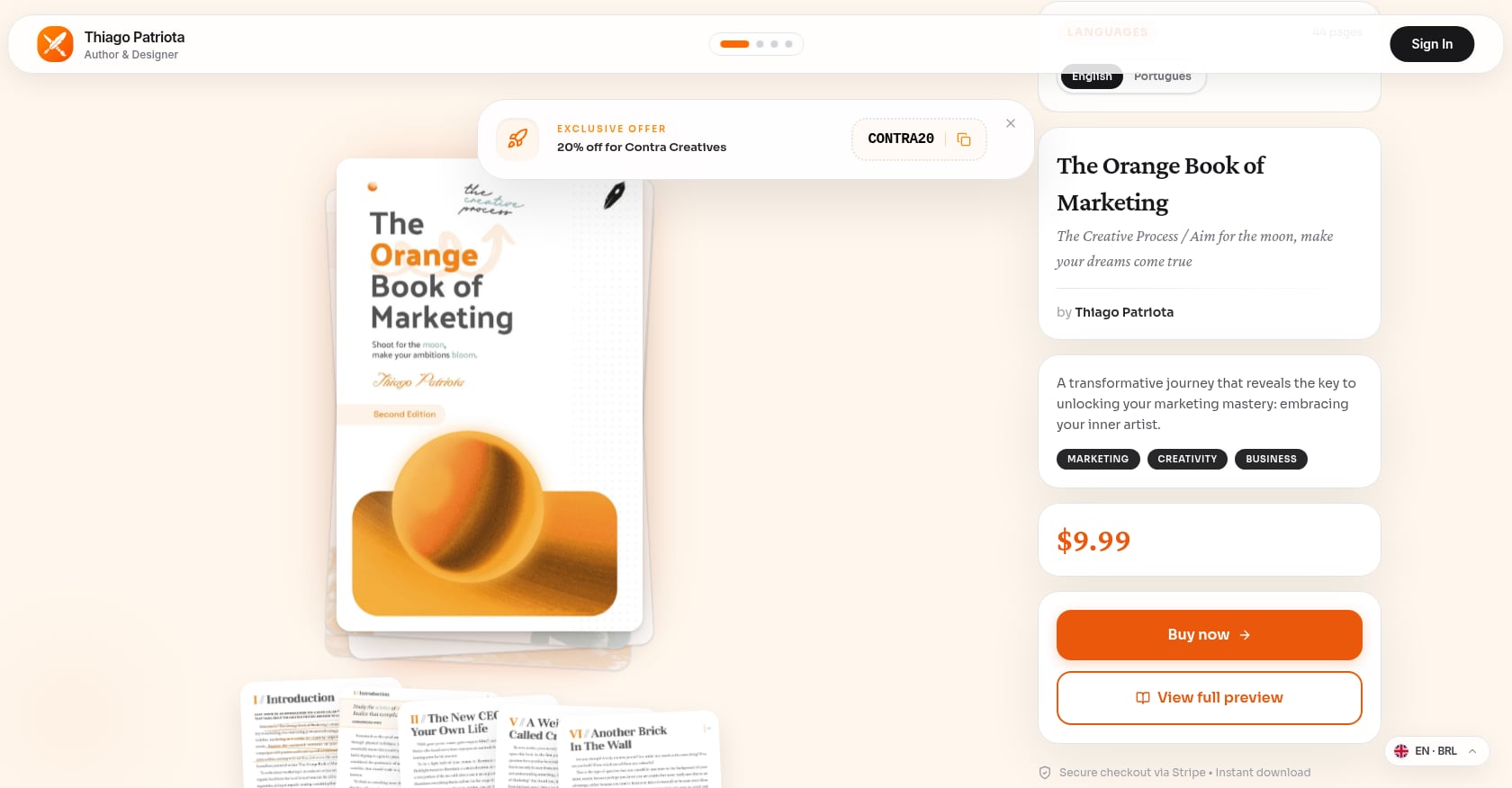
Best for: AI product teams that need research-informed agentic UX, trust layers, and developer-ready design execution rather than a generic certificate.
This is not a traditional UX research and AI course. It is an applied practitioner path, and that distinction matters. If your team is building AI or agentic software, the gap between “understanding AI in research” and “shipping trustworthy AI products” is enormous. A certificate does not close that gap. Applied UX architecture does.
Thiago Patriota’s digital library and creative archive focuses on high-craft UX/UI for agentic software, with end-to-end product and design support covering UX audits, user flows, high-fidelity Figma screens, interaction states, and component documentation. The practice also includes proprietary brand methodologies and original coursebooks used in undergraduate programs.
What you get:
- Curated UX/UI patterns for AI and agentic software
- UX audits and user flow architecture
- High-fidelity Figma screens with interaction states and component documentation
- Proprietary brand methodologies and coursebook-style educational assets
- Bilingual English/Portuguese design and strategy support
- Product narrative alignment for complex AI workflows
Pricing: Not publicly standardized. Discovery call available via scheduling link. Newsletter offers a free tier, with paid options at $5/month or $50/year.
For teams wrestling with how to make agentic workflows understandable, trustworthy, and developer-ready, the published work on trust layers in agentic AI product design and UX patterns for agentic AI demonstrates the kind of applied thinking no course curriculum can replicate at this depth.
Tradeoffs:
- Solo/lean practice, so parallel capacity is limited compared with larger agencies
- Several showcased works are conceptual or self-initiated
- Not a formal certificate course with standardized pricing
- No direct Reddit or forum discussions found about the library specifically
Verdict: If your real goal is to ship better AI product UX (not collect a credential), this is the strongest fit. A course teaches an individual. Applied design support helps a team build interfaces, controls, and trust patterns that real users can navigate.
2. UXR Institute AI for UX Research Course

Best for: Working UX researchers who need a focused, affordable, live course on AI-assisted qualitative analysis.
Among formal UX research and AI courses, this is the clearest match for researchers who care about methodological rigor. The UXR Institute course runs as a three-week live online cohort, meeting Tuesdays from 12 to 2pm ET, with upcoming sessions in May and June 2026.
Pricing: $295
Format: Live online, 3 weeks
What you learn:
- AI strategy tailored to a researcher’s specific context
- Qualitative coding, synthesis, and insight generation with AI
- Master prompts and prompt transparency
- Reusable AI agents for research workflows
- LLM strengths and limitations
- Tool-agnostic approach applicable to Dovetail, Maze, Atlas.ti, and MAXQDA
The tool-agnostic philosophy is a genuine differentiator. UXR Institute explicitly says it does not teach reliance on one specific tool because AI tools change quickly. Instead, it teaches the principles behind AI-assisted analysis. Given that 73.6% of UX professionals using AI rely on ChatGPT as their primary standalone tool and 54.6% are not using research-specific AI tools at all, teaching transferable skills is the right approach.
User sentiment: In a Reddit discussion about NN/g’s AI research course, a commenter mentioned UXR Institute as an alternative, noting its focus on “analysis through insights.” This is light sentiment rather than a full review, but it confirms practitioner awareness in UXR communities.
Tradeoffs:
- Smaller brand than NN/g, Coursera, or General Assembly
- Limited independent reviews found in public forums
- Focus is strongest on research analysis and synthesis, less on AI product design or prototyping
- Live cohort dates may not fit all schedules
Verdict: The best value for UX researchers who want a practical AI workflow without paying $2,000+. If you are a researcher first and want to stay a researcher, start here.
3. UX Design Institute Certificate in AI for User Research
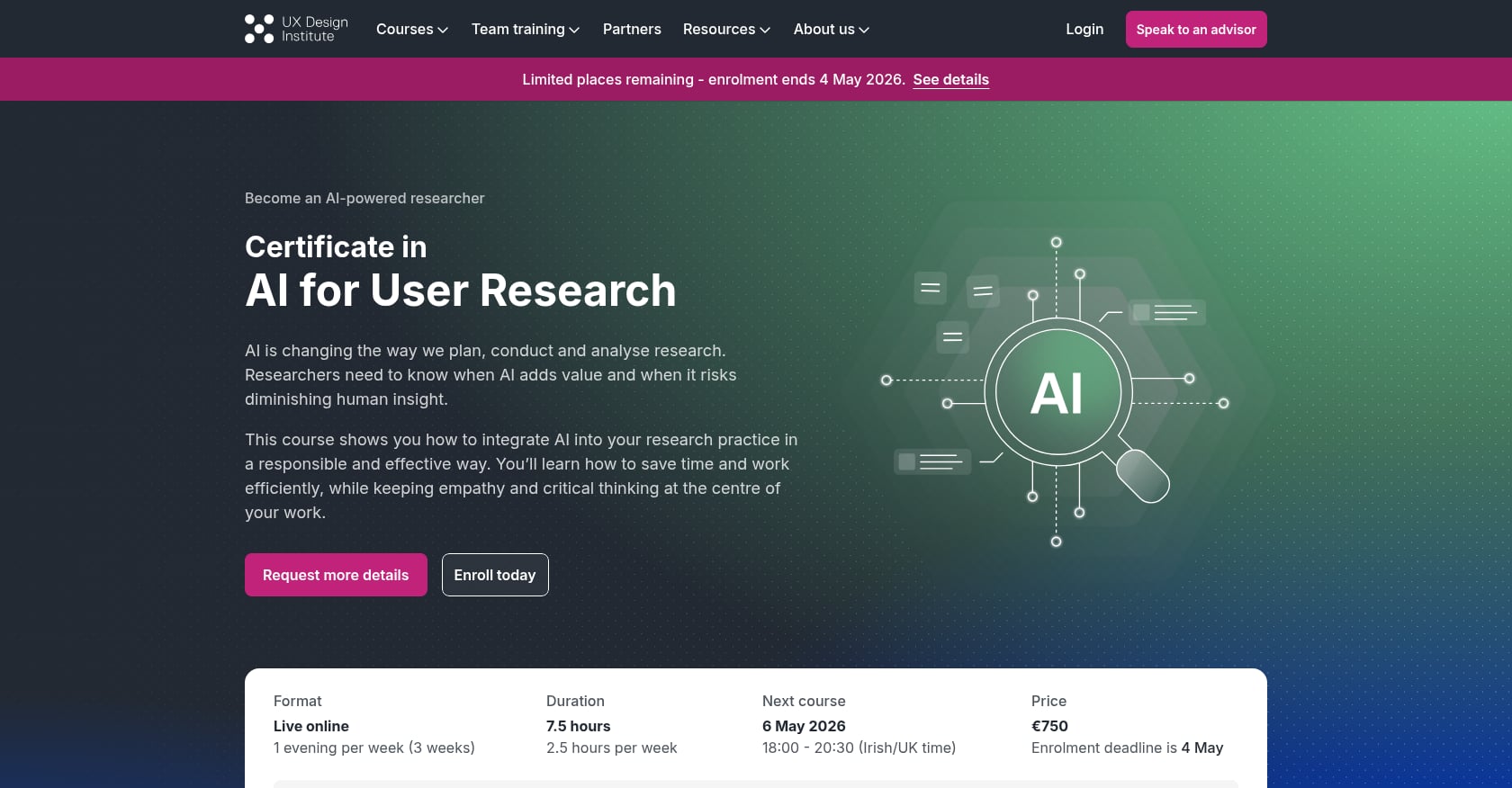
Best for: UX and product professionals who already understand research basics and want a guided, certificate-bearing introduction to AI in user research.
The UX Design Institute course is structured as one evening per week for three weeks, totaling 7.5 hours of live instruction. Sessions include small group work and discussion, with recordings available for three months.
Pricing: €750
Format: Live online, 3 weeks (2.5 hours per session)
What you learn:
- AI’s role in research planning and facilitation
- Prompting for research contexts
- AI for analysis and synthesis
- Tool evaluation methodology
- Bias mitigation and preserving human insight
- Stakeholder-tailored research communication
The course content is reviewed and updated monthly, which addresses the staleness concern that Reddit practitioners consistently raise. Learners need free accounts for some AI tools, and no prior AI experience is required.
User sentiment: The course page includes testimonials from professionals at organizations like the University of Glasgow and Roche. UX Design Institute carries platform-level ratings of 4.8 from 734 Google reviews and 4.5 from 120 Trustpilot reviews, though these reflect the platform broadly, not this specific course.
Tradeoffs:
- More expensive than UXR Institute for fewer total hours
- Time zone is Irish/UK evening, which may be inconvenient for US West Coast or APAC learners
- Short total duration limits depth on any single method
- Independent course-specific reviews are limited
- Requires existing research familiarity
Verdict: A solid pick if you value a formal certificate and prefer a structured, instructor-led environment. Not the deepest option, but well-maintained and credible.
4. General Assembly UX Research & Strategy with AI
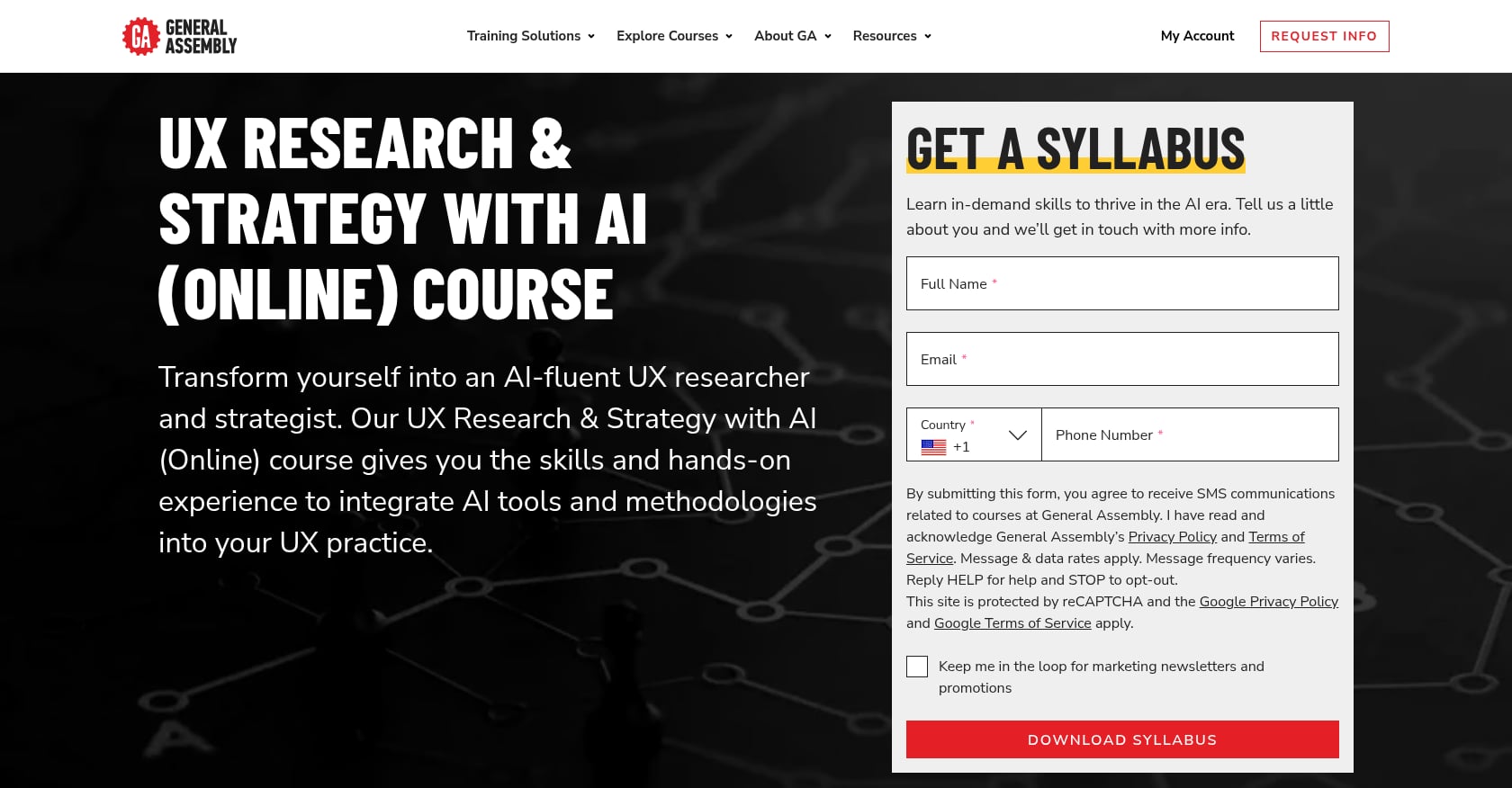
Best for: Employer-funded learners who want a comprehensive, structured program covering UX research, strategy, AI integration, and capstone work.
General Assembly’s UX Research & Strategy with AI course is the most expensive option on this list, but also the broadest. Multiple 2026 cohorts are available, with the part-time online format spanning roughly eight weeks.
Pricing: $2,950 (installments available, as low as $712.50)
Format: Part-time online, multiple cohort dates
What you learn:
- AI-driven UX research and customer-centered design principles
- Design thinking and agile workflows with AI integration
- Exploratory and evaluative research methods
- Accessibility research
- AI-enhanced testing methods (usability, A/B, multivariate)
- Statistical reasoning with AI support
- AI-assisted synthesis and stakeholder storytelling
- Ethical AI frameworks, bias mitigation, and capstone work
User sentiment: Reddit sentiment about General Assembly UX programs is mixed. Older threads include strong criticism around price and outcomes, while some comments acknowledge value depending on background and instructor quality. These threads refer to GA broadly, not necessarily this newer AI-specific course.
This aligns with a pattern seen across the UX research and AI course market: practitioners on Reddit report that expensive courses are best justified when an employer covers the cost, and that self-funded learners should consider lower-cost alternatives first.
Tradeoffs:
- Expensive compared with every other option on this list
- Some US state residents are not eligible to enroll
- Broader curriculum may mean less depth in qualitative analysis techniques
- GA brand sentiment is polarized in practitioner communities
- No premium subscriptions required, but private loan options suggest the price creates friction
Verdict: Recommend only if your employer is paying and you need a structured, portfolio-oriented program. Not the best value for self-funded researchers.
5. User Interviews AI for User Research 101 + AI Context Engineering for Research
Best for: Anyone who wants a free, credible starting point before committing money to a paid UX research and AI course.
User Interviews offers two free learning resources. AI for User Research 101 is a two-week course covering AI’s role in research, key concepts, challenges, and opportunities. AI Context Engineering for Research goes deeper into modern context-engineering practices for AI-supported workflows, targeting UX researchers, research operations professionals, market researchers, and UX designers.
Pricing: Free
Format: Free course/workshop, approximately 2 weeks
What you learn:
- AI basics for user research
- Practical and ethical considerations
- Context engineering for research workflows
- How to evaluate whether AI belongs in your research process
User sentiment: In a Reddit thread about NN/g’s AI course pricing, a commenter specifically recommended User Interviews’ free AI courses, including AI 101 and the Context Engineering workshop. Another thread confirmed the AI for UXR 101 course featured Kaleb Loosbrock of Instacart as instructor and was free to sign up.
User Interviews also publishes the annual AI in UX Research Report, which found that 73% of AI-using researchers apply it to summarize open-ended data like transcripts, and 52% use it for thematic or clustering analysis. The courses directly address these use cases.
Tradeoffs:
- Free courses are lighter than paid cohort programs
- No deep portfolio feedback or 1:1 coaching
- Connected to User Interviews’ broader platform ecosystem
- Best as a foundation layer, not the full learning path for senior researchers
Verdict: Start here before spending money. If you are evaluating whether AI belongs in your research workflow at all, these free resources give you enough context to make a smarter purchasing decision later.
6. Coursera / IBM Generative AI for UI/UX Design Specialization
Best for: Beginners who want an affordable, self-paced introduction to generative AI in design, with a shareable certificate.
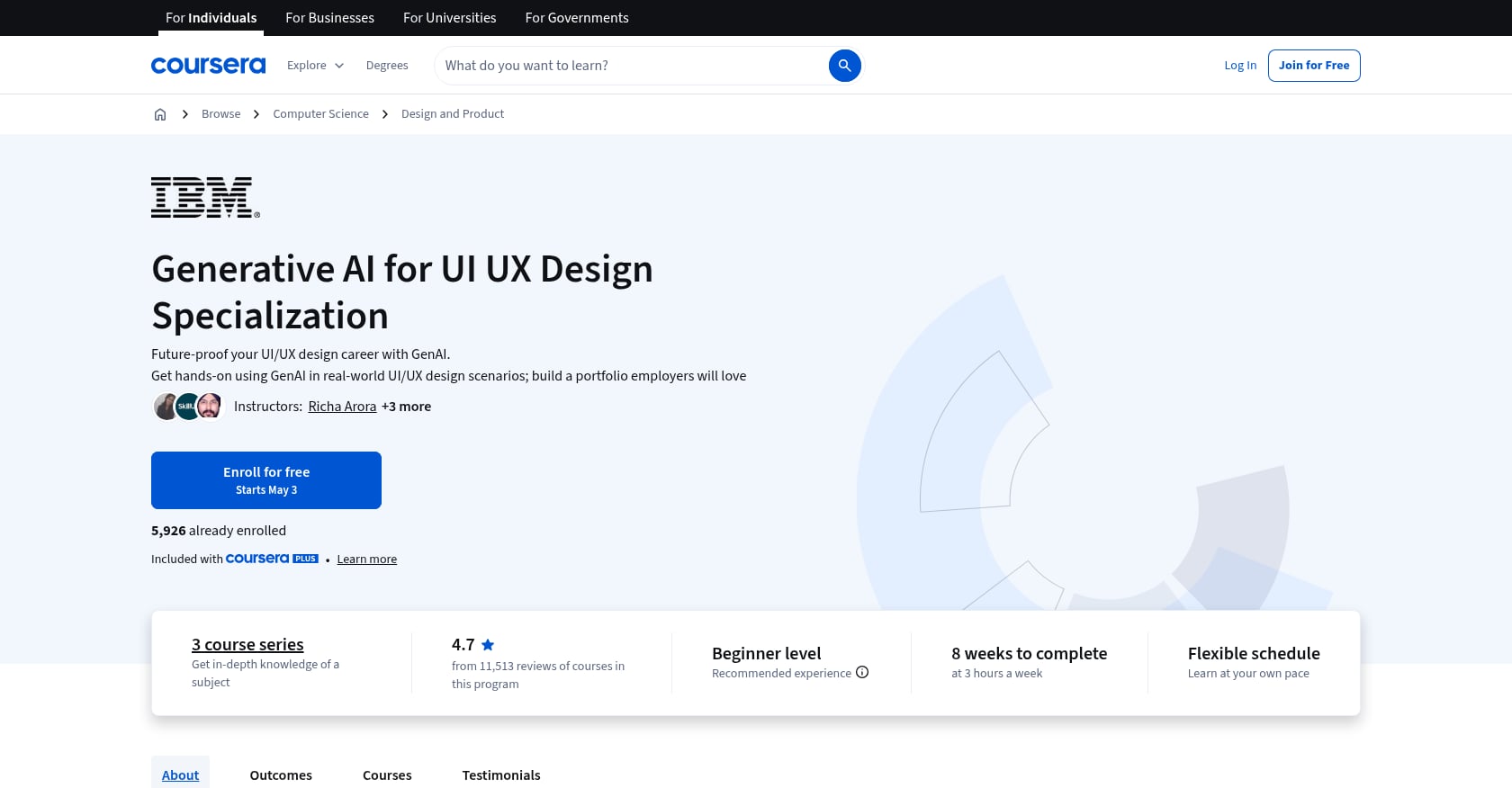
The IBM Generative AI for UI/UX Design Specialization is a three-course series at the beginner level, estimated at eight weeks with three hours per week. It carries a 4.7 rating from over 11,000 reviews and has more than 5,500 enrolled learners.
Pricing: Coursera Plus at $59/month or $399/year (promotional pricing of $35.40/month available through May 31, 2026)
Format: Self-paced, 3-course series, ~8 weeks
What you learn:
- Generative AI fundamentals and prompt engineering
- Design research, personas, and journey maps
- AI-powered UX surveys and user insight analysis
- Prototyping and conversational flows
- UI layout evaluation and UX copy
User sentiment: Reddit sentiment around IBM Coursera courses is mixed. One thread criticizes IBM courses as feeling AI-generated, skipping important material, and relying on memorization. This sentiment applies to IBM Coursera courses broadly, not necessarily this exact specialization.
Tradeoffs:
- Broad UI/UX orientation dilutes research depth significantly
- Self-paced learning leads to low completion rates without accountability
- Marketplace certificates can be less differentiating than project evidence
- Not designed for experienced researchers handling sensitive participant data
- More design-oriented than research-oriented
Verdict: A budget option for career-changers or early-career designers who want broad exposure. Not the right pick for anyone whose primary job is UX research.
7. Designlab AI for UX Design
Best for: Experienced UX and product designers (2+ years) who want to integrate AI across the full design workflow, including research synthesis.
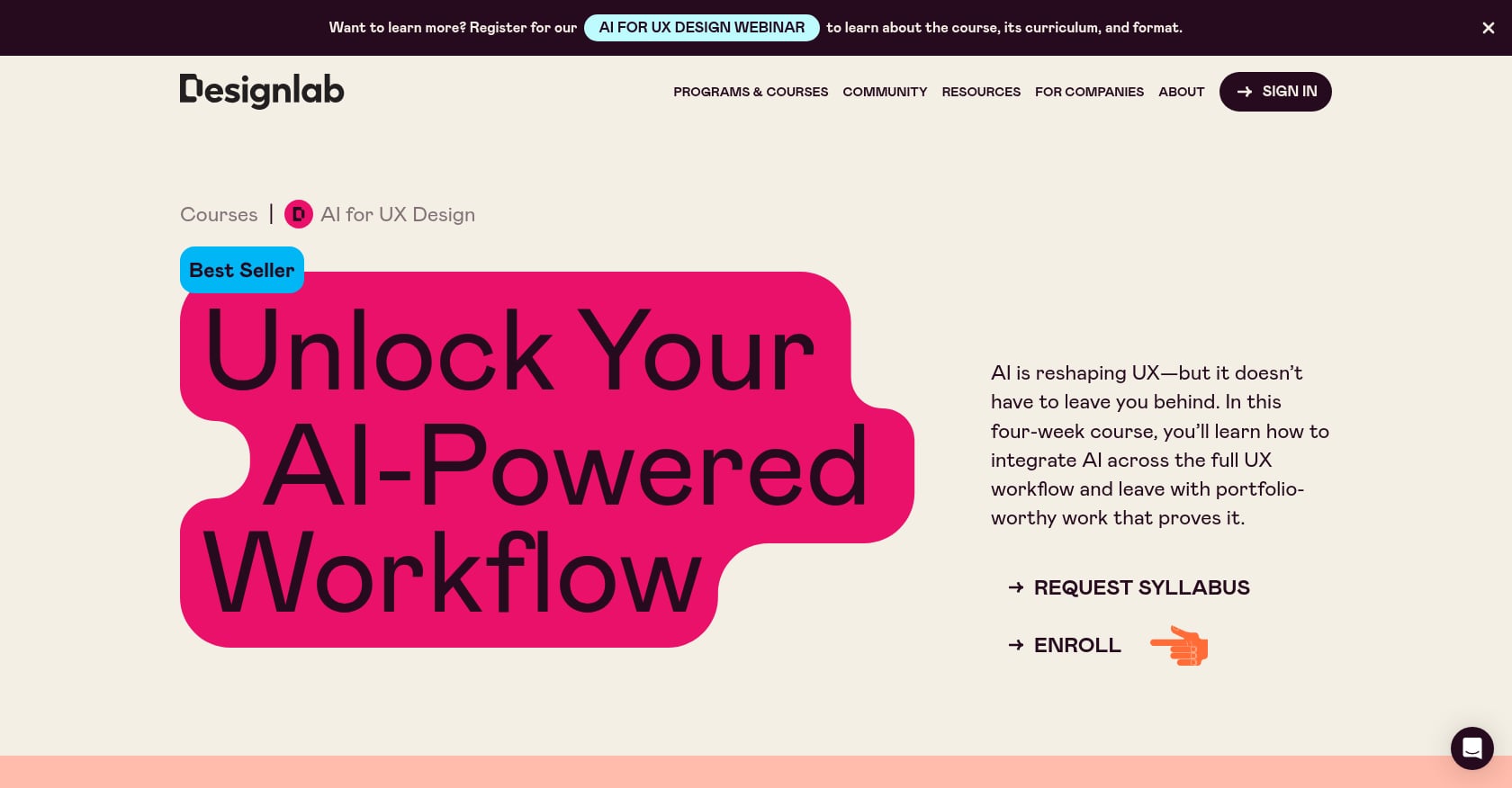
Designlab’s AI for UX Design course runs for four weeks with a mix of async projects, live lectures, and small peer group sessions with design mentors. It is priced at $799 and requires at least two years of UX/UI or product design experience.
Pricing: $799
Format: 4 weeks, mixed async + live
What you learn:
- AI across the full UX lifecycle
- Research synthesis with AI assistance
- Ideation and prototyping workflows
- Communicating design ideas with AI support
- Peer collaboration and mentor feedback
User sentiment: Reddit questions exist about whether Designlab’s AI for UX course is worth it, including from users interested in the research side. Designlab’s own case studies are positive but vendor-hosted, so they should be treated as marketing rather than independent review.
Tradeoffs:
- More product design-oriented than UX research-specific
- Higher price than UXR Institute, Uxcel, IxDF, and Coursera
- Requires existing UX knowledge as a prerequisite
- Independent course-specific reviews are limited
- Will not teach deep qualitative coding or transcript analysis
Verdict: Good for experienced product designers who want AI integrated into their design process. Not the top pick for someone whose primary work is user research.
8. Uxcel Enhancing UX Workflow with AI

Best for: Budget-conscious learners who want a quick, interactive overview of AI in UX workflows.
Uxcel’s course is short (about 3 hours), self-paced, and can be started for free. It includes 11 lessons, 3 levels, and 3 tests. The course was last updated March 6, 2026, carries a 4.5 rating from 810 ratings, and has over 11,500 learners enrolled.
Pricing: Free limited access; Pro at $15/month billed yearly; Team at $25/month per seat billed yearly
Format: Self-paced, ~3 hours
What you learn:
- AI-enhanced creativity and AI-assisted writing
- Data-driven insights and streamlined user research
- Personas and journey maps with AI
- User testing processes
- Research analysis and feedback management
User sentiment: Trustpilot lists Uxcel at 4.7 from 198 reviews. Reviewers praise the gamified, bite-sized content, but some say the platform can be theory-heavy with limited hands-on practice. Reddit sentiment is that Uxcel is useful for staying sharp affordably, but not sufficient by itself for serious career development.
Tradeoffs:
- Very short, so depth is limited
- Subscription model means ongoing cost for full access
- Less research-specific than UXR Institute or UX Design Institute
- No live feedback or cohort accountability
- Not enough to satisfy a senior researcher’s needs
Verdict: A supplement, not a primary training path. Useful for brushing up on concepts or testing whether AI in UX research is worth deeper investment.
9. Interaction Design Foundation AI and Human-Centered AI Courses
Best for: Self-directed learners who want affordable, long-term access to a broad library of UX, AI, and design theory.
The Interaction Design Foundation offers a membership model at $22/month billed annually, unlocking 40+ courses, certificates, masterclasses, local meetups, templates, and community access. AI-related offerings include courses on human-centered AI and AI-focused masterclasses.
Pricing: $22/month billed annually
Format: Membership library, self-paced
What you learn:
- Broad UX and interaction design foundations
- AI-related courses and masterclasses
- Psychology, design thinking, HCI, and research fundamentals
- Human-centered AI principles
User sentiment: Reddit sentiment is generally favorable for affordability and foundations. One user says newer IxDF courses on AI, behavioral design, and ethics helped them speak more confidently in interviews, but emphasizes that IxDF should be seen as support rather than a shortcut. Negative threads cite frustration with subscription billing and cancellation experiences. Trustpilot reviews echo both perspectives.
Tradeoffs:
- Annual billing can surprise users who do not read terms carefully
- Certificates may carry less weight than NN/g or university programs
- More library-like than cohort-based, so accountability is low
- AI content may be less hands-on than specialized courses
- Not a focused UX research and AI course, but rather a broad library
Verdict: Valuable for long-term foundational learning and pairing AI concepts with psychology, HCI, and design principles. Not the best exact match for someone searching specifically for an AI course for UX research.
Also Consider: Nielsen Norman Group AI Specialty
NN/g announced an AI Specialty within its UX Certificate, including five live online courses: Accelerating Research with AI, AI for Design Workflows, AI Product Strategy, Designing AI Experiences, and Efficient UX. The brand recognition is strong.
However, Reddit sentiment is skeptical. Practitioners report that NN/g course quality is “hit and miss” and multiple commenters say they would not pay for NN/g courses out of pocket. Third-party price estimates range from $1,200 to $2,400 per course, though official pricing should be verified directly.
Best for employer-funded learners who value NN/g’s brand for career credibility. Not the top recommendation for self-funded researchers.
What a Good AI Course for UX Research Must Actually Teach
Not all UX research and AI courses cover what matters. Here is what to look for, based on how researchers actually use AI and where it fails.
AI-assisted research planning. Using AI to generate discussion guides, structure interview protocols, and identify gaps in research plans. This is low-risk, high-value territory.
Prompting with research context. General-purpose prompting is not enough. Researchers need to provide study context, participant segments, research questions, and methodological constraints in their prompts. One Reddit commenter noted that the key to using AI in UX research is RAG and the quality of the research repository. Before paying for an AI course, teams should audit their transcript quality, consent language, tagging taxonomy, and evidence traceability. For teams working on the underlying information architecture of their research and product knowledge, understanding content taxonomy and library design principles matters as much as learning prompt techniques.
Transcript summarization with validation. AI can compress interview transcripts, but practitioners on Reddit warn that AI summaries can be flat and overgeneralized, and should not be used as the starting point for analysis. Look for courses that require human review, traceable quotes, disagreement analysis, and validation against raw data.
Coding and thematic analysis. The User Interviews report found that 52% of AI-using researchers apply it for thematic or clustering analysis. A good course teaches when AI clustering is useful and when it collapses important distinctions.
Bias, privacy, and governance. In one Reddit thread, a researcher explained they cannot use AI because their company has no approved AI tool and employees were instructed not to use personal devices for work AI use. Courses that ignore enterprise data governance leave a critical gap.
Synthetic users and AI-moderated interviews as limited tools. Practitioners on Reddit report being unimpressed by AI moderation demos, citing robotic voice, lag, and weaker insight quality. Good courses teach where these tools can support preparation or scale, but do not treat them as a replacement for human contact and interpretation.
How to Choose by Role
If You Are a Dedicated UX Researcher
Your core need is faster analysis without sacrificing evidence quality. Choose UXR Institute, UX Design Institute, or start with User Interviews’ free courses. If your employer is paying, NN/g’s brand recognition may matter for your career. Avoid picking a UI/prototyping-heavy course as your only training.
If You Are a Product Designer
Your need is broader: AI across the design lifecycle, from research synthesis to prototyping to handoff. Designlab, Uxcel, IxDF, and Coursera/IBM all fit. If you are working on AI or agentic software specifically, applied practitioner support around agentic software UX controls and metrics will close gaps that generic courses leave open.
If You Are a Founder or AI Product Team
A course helps individuals learn vocabulary. But if you are shipping an AI product, the bigger need is usually applied UX architecture: what the agent can do, what the user can control, what the system should reveal, when it should ask for confirmation, and how teams validate the experience with real users. Consider Thiago Patriota’s design library for applied AI/agentic UX, supplement with User Interviews’ free courses for team-wide UXR literacy, and add a formal course only if you need a shared baseline.
If You Are Self-Funded
Start with User Interviews’ free courses. Add Uxcel or IxDF for low-cost ongoing learning. Choose Coursera/IBM if you need a budget-friendly certificate. Move to UXR Institute ($295) when you are ready for focused, live training.
If Your Employer Is Paying
This changes the calculus. Employer-funded learners can justify UX Design Institute (€750), General Assembly ($2,950), NN/g, or Designlab ($799). Ask your manager for the option that includes real exercises, reusable deliverables, and a governance component you can bring back to the team.
Red Flags in AI for UX Research Courses
Watch for these warning signs before enrolling in any UX research and AI course:
- Promising to replace user interviews. AI can help prepare for interviews and analyze transcripts. It cannot replace the interviews themselves.
- Treating synthetic users as equivalent to real users. Useful for assumption mapping and scenario planning, not for primary research data.
- No discussion of privacy or confidential data. If the course does not teach what not to upload, it is incomplete.
- No human review workflow. “Upload transcripts, get themes, present insights” is not a research process.
- Tool demos without research methodology. A course locked to one tool will age within months.
- No recent updates. AI capabilities change quarterly. Course content should keep pace.
- No explanation of where AI fails. If a course only sells the upside, it is marketing, not education.
Choosing Principles Over Tool Demos
One theme runs through every practitioner community discussion about AI in UX research: tools change fast, judgment does not.
A Reddit commenter put it directly: learn by applying AI tools in real workflows rather than relying on course content that cannot keep up with tool evolution. The best AI UX research courses teach context engineering, qualitative coding judgment, bias mitigation, and audit trails, skills that transfer across whatever tools emerge next.
When evaluating any course, ask: is the curriculum updated at least cohort-by-cohort? Does it teach LLM limitations? Does it include human review loops? Does it avoid “one tool to rule them all” thinking?
For teams that need to go beyond learning and into execution, especially those building AI products where the UX itself must communicate trust, autonomy boundaries, and system transparency, the path forward is applied design work, not another certificate. Thiago Patriota’s published thinking on agentic SaaS onboarding and Figma component states for developer handoff shows what this looks like in practice.
Courses teach language. Applied practice produces products.
Frequently Asked Questions
What is the best UX research and AI course overall?
It depends on your goal. For focused UX research training, UXR Institute offers the best value at $295 with a tool-agnostic, methodology-first approach. For a formal certificate, UX Design Institute is strong at €750. For teams building AI products who need applied UX architecture rather than a credential, Thiago Patriota’s library and design practice is the most relevant path.
Can AI actually do UX research analysis?
AI can summarize, cluster, and organize qualitative data. It cannot interpret meaning, weigh contradictions, or understand context the way a trained researcher does. User Interviews found that 29% of researchers cite lack of nuance as a drawback. Use AI for first-pass work, then validate every theme against raw evidence.
Should UX researchers use AI-generated personas or synthetic users?
They can be useful for preparation, assumption testing, or scenario planning. They are not a substitute for real participant data. Practitioners on Reddit consistently push back against treating synthetic users as primary research evidence.
Are AI UX certificates worth it?
Worth it if they produce applied workflows, reusable templates, and portfolio-ready artifacts. Less valuable if they only provide a badge. Ask: “What will I be able to show after this course?” If the answer is just a PDF certificate, reconsider.
What should I learn first, UX research fundamentals or AI tools?
Fundamentals. AI accelerates weak research just as easily as strong research. Without a foundation in qualitative methods, sampling, interview technique, and synthesis, AI tools will make you faster at producing unreliable insights.
What is the best free AI course for UX research?
User Interviews’ AI for User Research 101 and AI Context Engineering for Research are the strongest free options found in this research. Both are recommended by practitioners in Reddit discussions.
What course should my employer pay for?
If the goal is shared team capability, choose a live course with exercises and governance content (UXR Institute, UX Design Institute, or General Assembly). If the goal is shipping better AI product UX, invest in applied consultancy or expert-led design support rather than individual certificates. Consider starting with a UX audit for your existing B2B SaaS product to identify where research-informed design improvements will have the most impact.
How fast do AI UX research courses go out of date?
Fast. AI tools and capabilities shift quarterly. Look for courses that update content monthly or between cohorts, teach transferable principles rather than tool-specific workflows, and include human review as a core requirement. UX Design Institute updates monthly. UXR Institute takes a tool-agnostic approach. Courses locked to a single tool or a specific version of ChatGPT will age the fastest.